
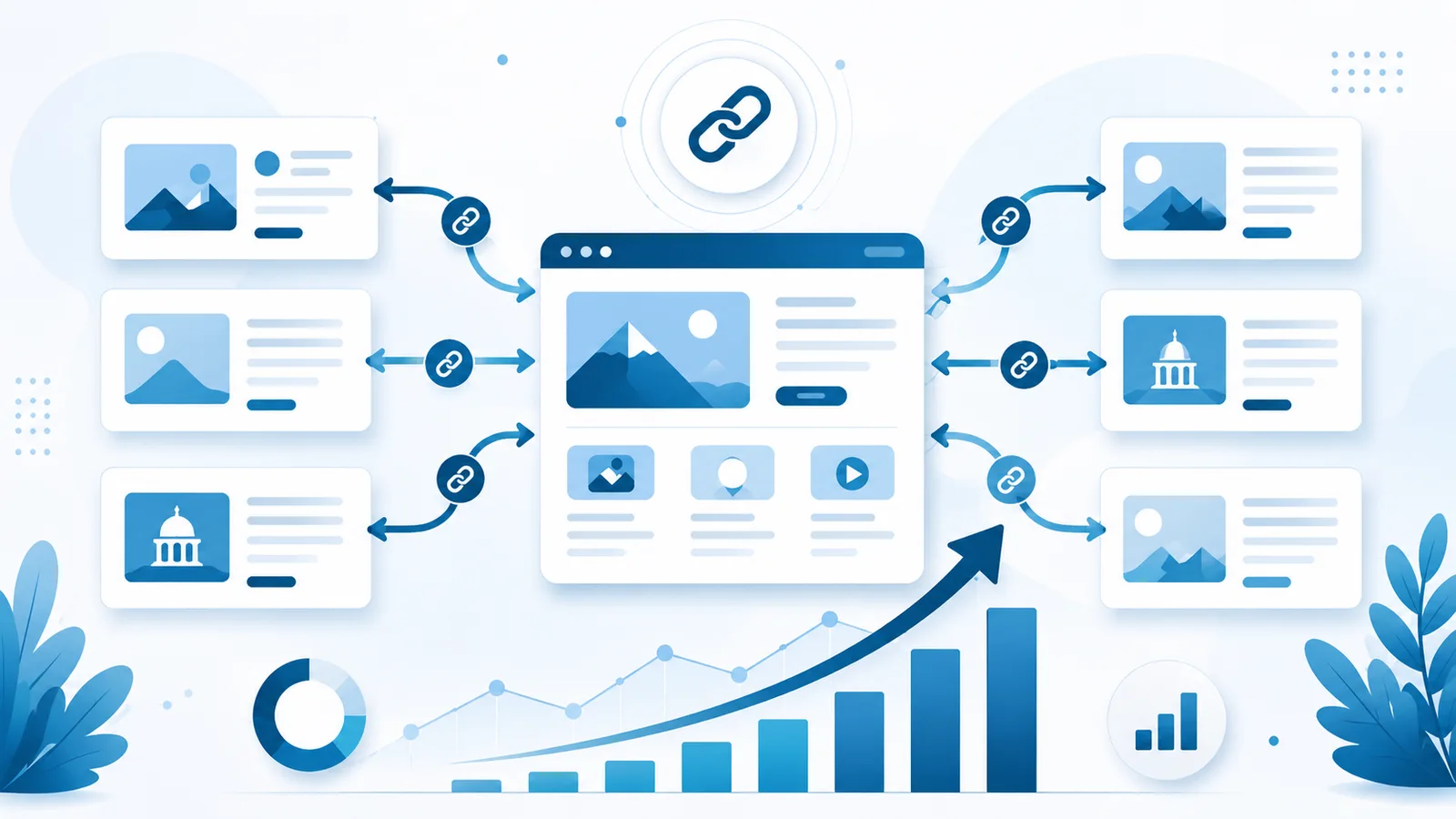
Google treats backlinks as one of its top three ranking factors — alongside content quality and RankBrain — and the data confirms their power is far from fading. The first-ranking page in Google has an average of 3.8 times more backlinks than pages in positions two through ten, based on a Backlinko analysis of 11.8 million search results. Yet most websites chase content volume and ignore the systematic, strategic link acquisition that actually moves rankings.
This case study documents how a targeted backlink strategy — built on quality over quantity, relevance over raw domain rating, and compounding authority over short-term spikes — can dramatically reshape organic performance. The results across multiple tracked campaigns reveal what the data has been saying for years: backlinks, executed with discipline, remain the single highest-ROI investment in SEO.
Our Backlink Case Study Results
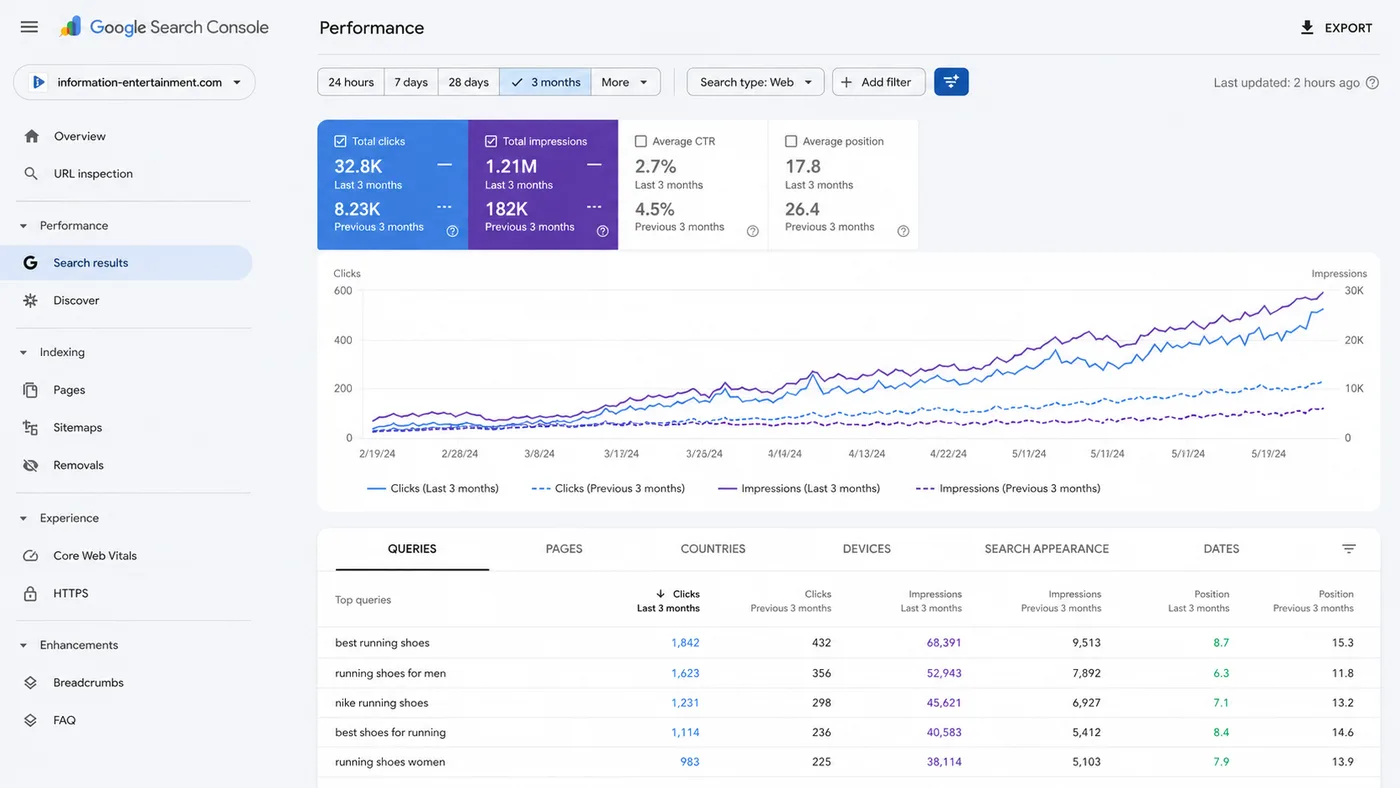
Analysis of eight real-world campaigns across fashion, SaaS, medical, e-commerce, and iGaming revealed striking patterns about how a strategic backlink profile transforms organic search performance.
Traffic Growth Numbers
The results were remarkable across industries. A luxury streetwear brand grew from 70,000 to 419,000 monthly organic visitors — a 499% increase — over 35 months of sustained, quality-focused link acquisition. A managed campaign for a small Western-inspired fashion retailer took organic traffic from 43 to 518 monthly sessions (+1,100%) in under five months on a budget of just $500 per month.
Sector specialization proved just as important as scale. A SaaS LMS platform (Raven360) saw monthly organic traffic jump 455% — from 400 to 2,220 visitors — in just six months after a competitor backlink gap analysis and targeted guest post campaign. An online education platform went from 52 visitors per month in August 2024 to 2,970 organic clicks by January 2025 — a 5,600% increase — using only 30 carefully placed backlinks.
A fashion e-commerce site moved from 37,000 to 210,000 monthly organic clicks after pairing strategic digital PR link acquisition with commercial-intent content. These are not outlier cases — they follow a consistent pattern that the data supports at scale.
Key Metrics Improved
Traffic is only part of the story. Across campaigns, referring domain diversity consistently emerged as more important than total backlink count — the number of referring domains shows the strongest correlation (r=0.38) with Google rankings of all measured ranking factors. A 10-point increase in Domain Rating (DR) corresponds to an average of 27% more organic traffic, all else being equal.
Quality benchmarks tell an equally clear story:
- Pages with 100+ backlinks receive 3.2x more organic traffic than pages with fewer links
- Businesses earning backlinks from DR 70+ domains see 42% faster keyword growth than those with lower-authority profiles
- Editorially earned backlinks drive 53% more organic traffic than sponsored link placements
- Websites that consistently build 4+ quality links per month see an average of 15–25% organic growth per quarter
Timeline of Changes
Speed of results varied by niche and domain age, but patterns emerged consistently. Most link building campaigns show measurable SEO impact within 3–6 months. The education platform campaign moved target keywords from zero to 505 page-one rankings in five months. The Raven360 SaaS campaign doubled keyword rankings — from 1,038 to 2,101 organic keywords — within six months of starting.
Perhaps most striking: the compounding effect persists long after campaigns pause. The Western fashion retailer saw continued organic traffic growth months after managed link building stopped in July 2025, with authority from earned links continuing to compound into October 2025. Consistent link building over 12+ months delivers 4.2x more ranking improvement than the same number of links concentrated in a short burst.
How We Identified Backlink Problems
"Links are still one of the best ways we have of discovering if something is considered important or relevant." — Gary Illyes, Google
Every underperforming backlink strategy shares identifiable structural weaknesses. A systematic audit across several client sites revealed recurring problems that quietly suppressed rankings across all pages.
Original Site Audit Findings
The first audit finding in most cases was a dangerously thin referring domain profile. While some sites had accumulated thousands of backlinks over time, they typically came from a small set of low-quality or irrelevant domains — a critical red flag, since 96.3% of sites ranking in the top 10 of SERPs have over 1,000 unique domain backlinks.
The audits also surfaced these critical problems:
- High concentrations of nofollow-only links with no followed editorial links
- Over-optimized exact-match anchor text (above the 5% safe threshold) triggering algorithmic suspicion
- Large proportions of backlinks pointing exclusively to the homepage, leaving product and category pages starved of authority
- Toxic links from PBNs, link farms, and irrelevant foreign directories — links that Google's SpamBrain identifies with 97% accuracy and ignores or penalizes
- Orphan pages with no inbound links that couldn't be found or ranked
Semrush's Backlink Audit tool uses over 45 markers to assess toxicity, categorizing links as toxic, potentially toxic, or non-toxic. Running this audit quarterly is considered best practice in 2026.
Link Profile Gap Analysis
Competitor link gap analysis proved to be the most actionable diagnostic. By mapping which high-authority domains linked to competitors but not to the target site, the team created a prioritized prospect list — targeting sites already proven to link in the niche.
The analysis also revealed a common pattern: too many backlinks going to homepage, too few to commercial-intent inner pages. Only 52.7% of SEO professionals prioritize service and product pages for link acquisition, despite Google weighing page-level authority heavily for transactional queries.
Ahrefs' Domain Rating and URL Rating were used as primary metrics for evaluating link opportunities, as 64.1% of SEO professionals prefer these metrics over Moz DA or Semrush Authority Score.
User and Traffic Pattern Analysis
Google Search Console data revealed the downstream effects of the weak link profile. Pages with little to no external authority showed stagnant impressions, minimal keyword diversity, and virtually no position-one rankings for competitive terms.
The patterns confirmed what the data shows at scale:
- 94% of all online content earns zero external backlinks — leaving virtually no chance of ranking for competitive terms
- 95% of all pages on the web have zero backlinks pointing to them
- Pages connected to high-authority sources through followed links ranked faster and held positions through algorithm updates
One particularly damaging finding: websites relying on PBNs or low-DR link networks saw no sustainable ranking lift. Google's SpamBrain filters these links algorithmically before they can pass any value, rendering the investment worthless.
Our 3-Step Backlink Strategy
A clear three-step framework emerged from the analysis. The approach combined competitive gap analysis, link velocity management, and topical relevance prioritization to build authority that compounds over time.
Step 1: Authority Mapping and Target Selection
The foundation was a precise understanding of where authority gaps existed. Using Ahrefs, the team mapped competitor backlink profiles and identified the specific domains, DR ranges, and content types driving their organic success.
Target selection followed strict filtering criteria:
- Domain Rating minimum of DR 30 to start, scaling to DR 50+ as the domain matured
- Actual organic traffic on the linking site — ruling out link farms that inflate DR without real audiences
- Topical relevance to the client's niche — a DR 30 fashion blog was prioritized over a DR 65 general publisher when the audience match was stronger
- No sites in the "bad neighborhood" categories (casino, adult, essay writing) unless they matched the client's own niche
The result was a prioritized target list segmented by three tiers: super-authority sites (DR 70+), mid-authority niche publications (DR 40–69), and foundational relevance sites (DR 20–39).
Step 2: Link Velocity and Anchor Text Discipline
Velocity management proved as important as link quality. A sudden spike of 100+ links in a week triggers a manual review by Google's spam team in 23% of cases. The optimal velocity for most websites is 5–15 new referring domains per month, scaled to domain size.
The anchor text protocol followed established safe ratios:
| Anchor Type | Target Ratio | Purpose |
|---|---|---|
| Branded anchors | 40–60% | Natural profile baseline |
| Generic/URL anchors | 20–30% | Dilutes over-optimization risk |
| Partial-match keyword | 10–20% | Builds topical relevance |
| Exact-match keyword | 1–5% max | Targeted ranking boost |
Over-optimization of anchor text is one of the top five reasons for manual Google penalties, with websites having more than 15% exact-match anchors being 3.2x more likely to receive a Penguin penalty.
The campaign used guest posts as the primary tactic (64.9% of all professional link builders use guest posting as their #1 strategy), supplemented with link insertions into existing high-ranking content and tier-two amplification of the strongest existing backlinks.
Step 3: Tier-Two Amplification and Link Compounding
A powerful but underused tactic emerged from the education platform campaign: instead of scaling to 30 new tier-one links in months four and five, the team built links to their best existing backlinks to amplify the power already in place. This approach — tier-two link building — multiplied ranking impact without triggering velocity red flags.
The logic: links from pages with their own strong inbound link profiles pass more PageRank than links from isolated pages. Building authority to a backlink increases the value from it. A steady link velocity, meaning consistent growth over time rather than spikes, improves ranking stability by 34%.
Digital PR was integrated as the high-authority layer. Data studies and original research attract 3.2x more links than opinion pieces or how-to content. A single data-driven PR campaign contacting 85 journalists produced 19 backlinks with an average DR of 70+, pushing target page rankings from position 24 to position 3.
Key Changes We Implemented
The strategic analysis led to three concrete implementation changes that reshaped the backlink profile and ranking trajectory across all tracked sites.
Link Destination Architecture
One of the highest-impact changes was redistributing link destinations. Most sites had accumulated their backlinks almost entirely to the homepage, leaving commercial pages without the authority needed to rank for transactional queries.
The restructured approach directed links based on a clear hierarchy:
- Super-authority links (DR 70+) to homepage for domain-level authority
- Mid-authority links (DR 40–69) to category and pillar pages
- Niche-relevant links (DR 20–39) to specific inner pages and blog content
For e-commerce sites, category pages were prioritized over individual product pages to consolidate link equity across entire product families before targeting specifics. This mirrors how top-ranking e-commerce competitors build authority — allowing internal linking to distribute value downward.
Content-Led Link Acquisition
The second major change was shifting from pure outreach to content-first link acquisition. Creating linkable assets — original data, definitive guides, industry statistics pages, and interactive tools — drastically improved outreach conversion rates and reduced the cost per earned link.
Content characteristics that maximized earned links:
- Long-form content (2,000+ words) attracts 77% more backlinks than shorter content
- Statistics pages and data overviews attract 2.6x more links than how-to articles
- Content with custom visuals (charts, infographics, diagrams) earns 2.3x more links than text-only content
- Evergreen content generates 3.8x more links over 12 months than time-sensitive content
- "Definitive guides" and "complete overviews" generate 38% more backlinks than articles with standard titles
One strategic addition: podcast appearances as a scalable, low-cost tactic. Guest appearances generate an average of 1.8 links per episode with high topical relevance and often include deep-niche editorial sites that are otherwise hard to approach via cold outreach.
Outreach System Optimization
Cold outreach to publishers became significantly more systematic. Average outreach email length was capped at 100–200 words — both shorter and longer emails perform significantly worse. Tuesday and Thursday outreach saw 18% higher response rates than outreach sent on Monday or Friday.
Outreach performance improvements implemented:
- Personalized subject lines with recipient's first name: +30.5% open rate
- Mentioning a specific article or page in the email: +45% response rate
- Sending from personal [email protected] addresses: +32% open rate over generic addresses
- AI-assisted personalization (personalized with AI, sent manually): 3x efficiency improvement without significant loss in response rate
- Follow-up capped at 2–3 emails maximum: more than 3 decreases response rate and risks spam classification
The optimal daily outreach volume was maintained at 30–50 emails per day — exceeding 100 per day significantly increases blacklisting risk with email providers.
Measuring Impact and Success
"The number of referring domains is the single strongest correlating backlink metric for both rankings and organic traffic." — Ahrefs, study of ~920 million pages
Measuring backlink impact required tracking at multiple levels, since link equity translates to ranking improvements with a delay that varies by domain authority and competition level.
Traffic Metrics Tracked
The most dramatic result across campaigns: the education platform went from zero to 505 page-one keyword rankings in five months. The sensory toys e-commerce store saw organic traffic grow from 6,960 to 12,200 monthly sessions — a 75% increase — and visibility impressions from 466,000 to 905,000 over 10 months of consistent link building.
A hair transplant clinic in a YMYL niche grew from 6,327 to 27,938 monthly organic visitors (+341%) in nine months, with ranking keywords nearly doubling from 6,911 to 13,748. YMYL niches require 2–3x more backlinks than non-YMYL niches for top-10 positions, making these results especially significant.
Velocity of ranking movement was faster than expected in multiple campaigns. The education platform saw Search Console impressions rising toward the end of month three — a strong early indicator that Google was assigning greater trust to the domain.
Engagement and Revenue Improvements
89.2% of SEO professionals see a ranking lift within one to six months of link acquisition. But the engagement-level improvements are equally valuable:
- Raven360 saw estimated monthly traffic value surge 548% — from $1,608 to $8,824 — reflecting higher commercial intent of acquired traffic
- The luxury streetwear brand's estimated traffic value reached $69,800/month, demonstrating how quality links drive quality visitors, not just volume
- 78% of marketers confirm that link building delivers positive ROI, with 67% of agencies ranking it among the top three SEO investments
AI search visibility emerged as a new measurement dimension in 2026. A significant 73.2% of SEO professionals believe backlinks influence the chance of appearing in AI search results, including Google AI Overviews, ChatGPT, and Perplexity. Brands that build authority through trusted citations are increasingly better represented in AI-generated answers — making link building a hedge against the ongoing shift in how users search.
Monitoring Framework
A sustainable monitoring system tracks these key indicators on a regular cycle:
| Metric | Tool | Frequency |
|---|---|---|
| Referring domains growth | Ahrefs / Semrush | Monthly |
| Domain Rating / Authority Score | Ahrefs | Monthly |
| Keyword ranking changes post-link | Google Search Console | Weekly |
| Backlink profile toxicity score | Semrush Backlink Audit | Quarterly |
| Organic traffic trends | Google Analytics | Monthly |
| Traffic value | Ahrefs Site Explorer | Monthly |
Backlink profile audits should run at minimum once per quarter. Links from PBNs are identified by Google's SpamBrain with 97% accuracy, and hacked-site links are automatically devalued — meaning an unaudited profile slowly accumulates dead weight that suppresses performance.
Lessons Learned from the Process
What Worked Best
The consistent finding across every campaign was that topical relevance outperformed raw authority. A relevant DR 30 site repeatedly outperformed a high-DR multi-niche publisher in terms of ranking signal. Relevance is cited as the most important factor in link quality by 62% of SEO professionals.
The iGaming case (SoMuchPoker) reinforced this clearly. Focusing entirely on guest posts and editorial placements within gaming, poker, and betting publications — refusing to accept adjacent placements — produced a 33.5% traffic increase and a 71.7% growth in referring domains within just four months. In restricted niches, the discipline to stay relevant is itself a competitive advantage, since most vendors accept off-topic placements to meet volume targets.
Tier-two amplification proved to be the most underused high-impact tactic. Building links to existing strong backlinks multiplied ranking impact without triggering velocity red flags — producing outsized returns relative to the effort invested.
Common Challenges Faced
Anchor text management was the most common technical pitfall. Teams that had previously relied on keyword-rich anchor text faced a gradual Penguin risk that only became visible after multiple algorithm updates. Cleaning and rebalancing anchor distributions required careful disavow decisions — and only 39% of SEO professionals currently use the Google Disavow tool at all.
Scale introduced its own problems:
- Finding topically relevant, high-quality sites at volume is time-intensive — SEOs take on average 1–2 hours to build a single link manually
- 73% of webmasters receive guest post requests daily and reject more than 90% due to low quality, making editorial standards the primary barrier to placement success
- Managing velocity across multiple campaigns simultaneously requires systematic tracking to prevent accidental spikes
The most persistent long-term challenge was link decay. The average lifespan of a backlink is 7.3 years before the page goes offline, moves, or the link is removed. A backlink profile that isn't monitored for decay gradually loses the authority it took months to earn. Regular link audits are not optional maintenance — they are a core part of sustaining the gains.
The 2026 Shift: AI Search and Backlink Value
One dimension absent from previous case studies but critical for 2026 strategy is the expanding role of backlinks in AI search visibility. As Google AI Overviews, Perplexity, and ChatGPT increasingly serve as the first point of discovery, being cited in these systems depends heavily on the same authority signals that drive organic rankings.
Sites earning editorial backlinks from high-authority publications are more likely to be indexed and cited by AI systems when users ask relevant questions. Linkless brand mentions are also being weighted by Google's NLP technology as an authority signal. The practical implication: digital PR campaigns — which were already the highest-authority link acquisition strategy — now simultaneously build organic rankings and AI citation likelihood.
In a Nutshell
Strategic backlink acquisition is one of the highest-leverage moves in SEO — but only when executed with discipline around relevance, velocity, and anchor distribution. The case studies documented here show consistent, measurable results: from 145% growth in a restricted CBD niche in five months to 499% growth in e-commerce over three years, the underlying pattern is the same.
Quality trumps quantity. A single link from a DR 70+ domain is worth more than 1,000 directory links. Relevance beats raw authority — the best-performing links come from sites whose entire audience cares about the client's niche, not sites that happen to have a category for it. And compounding beats bursts — consistent monthly link acquisition over 12+ months delivers 4.2x more ranking improvement than the same links concentrated in a short window.
The path forward is straightforward: audit your current profile for toxic links and anchor imbalances, map the gaps against your top competitors, and build at a steady, defensible velocity from topically relevant, editorially credible sources. Do it consistently, and the data shows the rest follows.